Florida thunderstorms can be brutal on electronic systems, and fire alarm equipment is no exception.
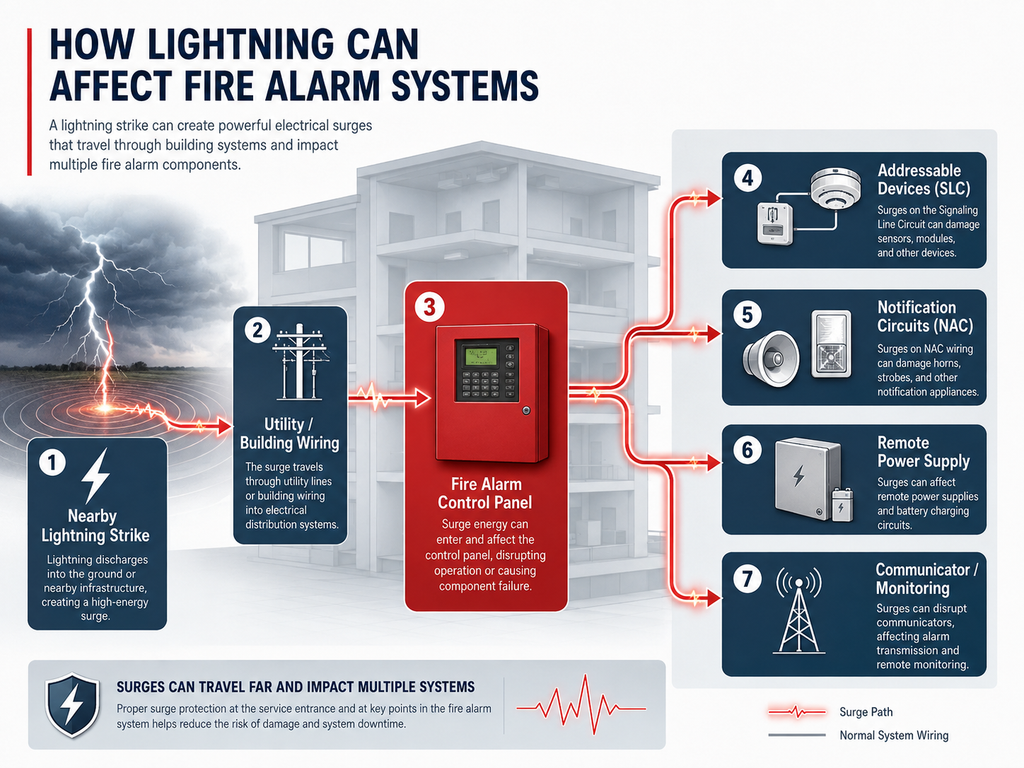
When lightning strikes a building, utility service, nearby structure, or even the surrounding property, the resulting electrical surge can travel through power, communication, and low-voltage wiring throughout the building.
Sometimes the result is obvious: a fire alarm panel goes dark, a circuit fails, or multiple devices immediately report trouble.
Other times, the system appears to survive.
That does not necessarily mean it escaped without damage.
Lightning Damage Is Not Always Immediate
Modern fire alarm systems contain sensitive electronic components distributed throughout a building. The fire alarm control panel may be only one part of a much larger network of addressable modules, smoke detectors, power supplies, notification circuits, communication equipment, and monitoring interfaces.
A surge may completely destroy a component, but it can also damage electronics without causing an immediate total failure.
The affected equipment may continue operating for hours, days, or longer before symptoms begin to appear.
Those symptoms can include:
- Intermittent communication faults
- Devices repeatedly dropping offline and restoring
- Unexplained system troubles
- False alarm activations
- Failed monitor or control modules
- Notification circuit problems
- Cellular or monitoring communication failures
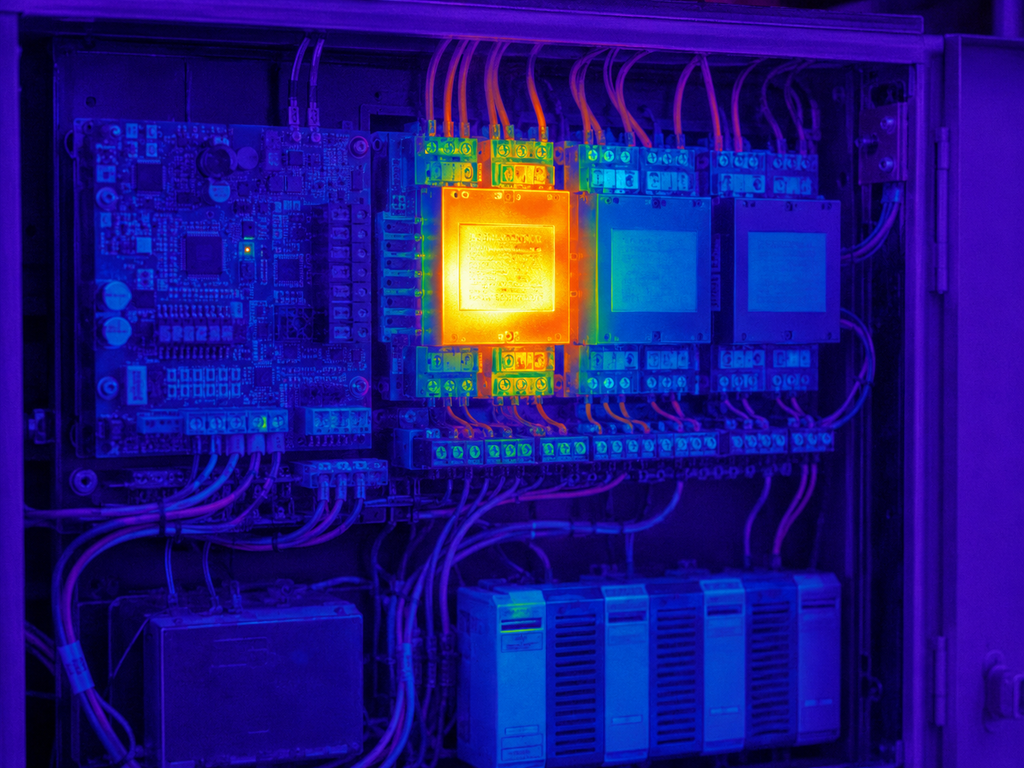
- Devices or modules operating abnormally hot
- Power-supply or charging problems
- Faults that disappear after a reset and later return
This is one reason post-storm fire alarm problems can be difficult to diagnose.
The component reporting the problem is not always the component that caused it.
A Clear Fire Alarm Panel Doesn’t Tell the Whole Story
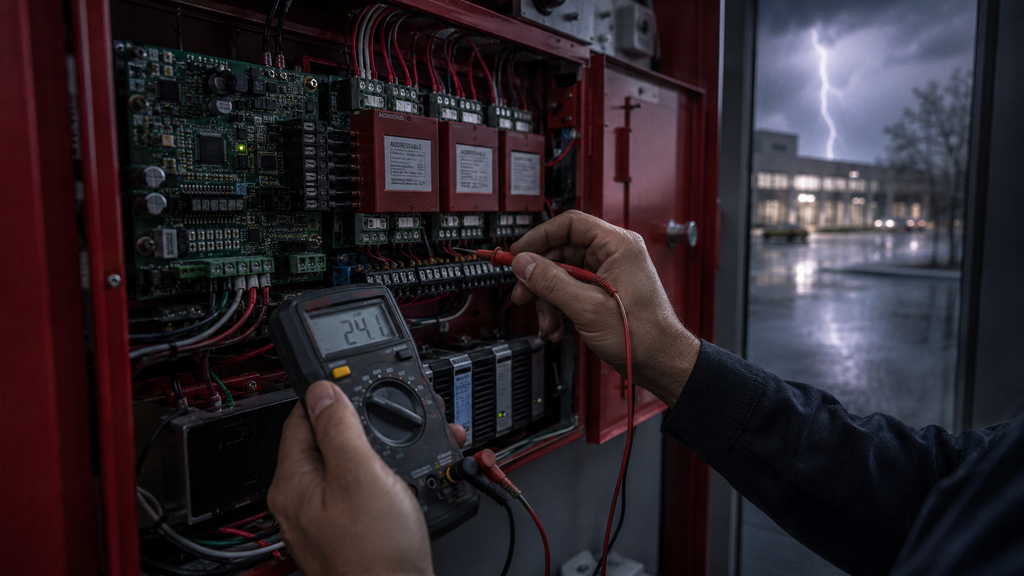
After a storm, one of the first things someone may check is the display on the fire alarm control panel.
If the system shows SYSTEM NORMAL, that’s certainly a good sign.
But it isn’t a complete evaluation.
A fire alarm panel continuously supervises many conditions, but it cannot independently determine whether every connected component has suffered internal surge damage or degradation while still remaining capable of communicating.
An addressable device, for example, may still communicate with the panel while its internal electronics have been compromised.
Similarly, a monitor module may appear normal until the monitored equipment changes state and the module is required to transmit that condition.
The real question after suspected lightning or surge exposure isn’t simply:
“Is the panel showing a trouble?”
It’s:
“Does the entire system still function the way it is supposed to?”
Troubleshooting Requires More Than Resetting the Panel
Electrical surge problems can create some of the most frustrating service calls in the fire alarm industry because the symptoms may be scattered throughout the system.
Proper troubleshooting may include reviewing the fire alarm system’s event history, identifying when faults began, determining whether multiple failures appeared around the same time, inspecting affected equipment, evaluating communication circuits, checking power supplies, and functionally testing devices and system interfaces.
Technicians may also need to determine whether a failed component is the original problem or simply another symptom of a surge that traveled through the system.
Replacing the first device that reports a fault may temporarily clear the panel without identifying the larger issue.
That’s why understanding the system as a whole matters.
Sometimes the Second Failure Tells the Story
One of the biggest clues following a lightning event is a pattern of component failures.
A single failed module could simply be a failed module.
Several electronic components developing unusual faults following the same storm deserves a closer look.
The same applies when devices begin behaving differently than they did before the event — particularly when equipment becomes unusually warm, begins reporting intermittent communication problems, or produces unexplained alarm or supervisory conditions.
Those patterns help an experienced technician determine where additional testing should be performed instead of simply continuing to replace components one at a time.
False Alarms Can Be Part of the Problem
Surge-damaged equipment does not always fail quietly.
In some cases, damaged electronics or field wiring can generate intermittent conditions that eventually appear as alarm signals.
That can mean unnecessary building evacuations, repeated monitoring-station signals, and potentially repeated fire department responses.
When a property begins experiencing unexplained false alarms following severe weather, the storm history should be part of the troubleshooting process.
The goal is not simply to reset the system after every activation.
The goal is to determine why the system activated in the first place.
What Should Be Checked After Suspected Lightning Damage?
The appropriate response depends on the system and the severity of the event, but evaluation may include:
- Reviewing recent fire alarm event history
- Investigating new or intermittent system troubles
- Inspecting fire alarm control equipment and remote power supplies
- Testing affected initiating devices and modules
- Verifying notification appliance operation
- Checking supervisory and monitoring interfaces
- Confirming communication with the supervising station
- Evaluating abnormal device behavior
- Functionally testing repaired or replaced equipment
- Monitoring the system for recurring faults following repairs
The objective is to establish confidence that the system is actually operational — not simply that the display is currently clear.
Experience Matters When the Problem Isn’t Obvious
Fire alarm troubleshooting is different from ordinary parts replacement.
Many systems encountered throughout Florida have been modified, expanded, repaired, or partially upgraded over decades. Documentation may be incomplete, wiring methods may have changed, and different generations of equipment may exist on the same property.
When lightning or another electrical event introduces additional problems, understanding how those pieces interact becomes critical.
At Last Mann Standing, L.L.C., we specialize in troubleshooting, servicing, and repairing fire alarm systems throughout Florida’s Tampa Bay and surrounding areas.
Our experience includes systems from Edwards/EST, Kidde, Silent Knight, Fire-Lite, Notifier, Gamewell-FCI, Potter, and other commonly encountered fire alarm platforms.
Whether the problem is a persistent trouble condition, intermittent communication fault, repeated false alarm, failed device, or suspected storm-related damage, our objective is the same:
Find the cause, repair it correctly, and verify the system operates as intended.
Because after a lightning event, “SYSTEM NORMAL” should be the conclusion of the troubleshooting process — not the beginning and end of it.